
"Haitian coffee regions"
60 article(s) found
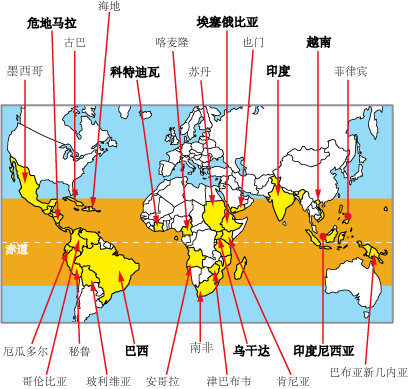
Flavor and taste characteristics of Haitian coffee in Port-au-Prince, Haiti. Blue Haitian coffee mountainous country Haiti
Haiti: Port-au-Prince coffee flavor taste characteristics: rich flavor, mild taste. Haiti, located in the western part of the island of Hispaniola in the Lobi Sea, covers an area of about 27800 square kilometers. Haiti means a mountainous country in indigenous languages. This mountainous country is also the most disaster-prone region on earth. It has been in the midst of war and poverty, and is the most material-poor country in the world.
Boutique coffee beans Haitian boutique coffee Mare Blanche
The mention of Haiti has to remind people of the 2010 Haiti earthquake and the poverty and backwardness of the region, no one will remember Haitian coffee, because the local production conditions are extremely backward and the growth of coffee trees can only be achieved by the unique local climatic conditions, while Thio-tte Mare Blanche in southeastern Haiti has the unique climatic conditions for producing quality coffee. Mare

Coffee bean producing areas Caribbean Sea Haitian boutique coffee beans
Haiti, located in the north of the Caribbean Sea and west of Hispaniola Island, covers an area of about 27800 square kilometers. It is bordered by the Dominican Republic to the east, the Caribbean Sea to the south, the Atlantic Ocean to the north, and Cuba and Jamaica to the west across the Strait. It is an island country in the eastern Caribbean with a coastline of more than 1080 kilometers. The region where the country is located is on the circum-Pacific seismic belt. The whole territory is 3x4 for mountains.
Haitian Fine Coffee Mare Blanche COOP CAB Coffee grower Cooperative
The mention of Haiti has to remind people of the 2010 Haiti earthquake and the poverty and backwardness of the region, no one will remember Haitian coffee, because the local production conditions are extremely backward and the growth of coffee trees can only be achieved by the unique local climatic conditions, while Thio-tte Mare Blanche in southeastern Haiti has the unique climatic conditions for producing quality coffee. Mare
Haitian boutique coffee Mare Blanche
The mention of Haiti has to remind people of the 2010 Haiti earthquake and the poverty and backwardness of the region, no one will remember Haitian coffee, because the local production conditions are extremely backward and the growth of coffee trees can only be achieved by the unique local climatic conditions, while Thio-tte Mare Blanche in southeastern Haiti has the unique climatic conditions for producing quality coffee.
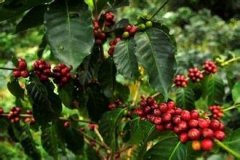
Haitian pollution-free coffee
The Republic of Haiti is an island country in the northern Caribbean, which means a mountainous country in Indian. Haiti has a shortage of energy, backward industry and an economy dominated by agriculture. As one of the most materialistic regions in the world, Haiti is a world-renowned producer of coffee beans. Most of the coffee produced in Haiti is grown in a pure natural state.

Rich and smooth Haitian coffee Dominica Santo Domingo coffee
Coffee in Dominica is grown in highlands and lowlands, and its taste is slightly different. The upland is sour, but the taste is rich; the lowland is less sour and tastes smoother. Boutique coffee has become popular in recent years. High-quality coffee beans produced by some Dominican estates have a rich aroma, mellow taste and moderately bright sour taste, and have been bought with the more famous Puerto Rico beans or teeth.

Rich flavor, mild taste, Port-au-Prince, Haiti coffee
Most of the coffee produced in Haiti is grown in a purely natural state, which is not intentional but the result of material shortages because coffee farmers are too poor to buy fungicides, insecticides and fertilizers. On the contrary, this makes the coffee produced in Haiti the most natural and pollution-free. Haitian coffee has full granules, rich flavor, medium to low acidity and warm taste.
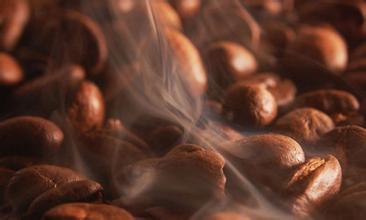
Introduction to the flavor and taste characteristics and roasting degree of Asian coffee beans in Port-au-Prince, Haiti
Flavor and taste characteristics: rich flavor, mild taste. Haiti, located in the western part of the island of Hispaniola in the Lobi Sea, covers an area of about 27800 square kilometers. Haiti means a mountainous country in indigenous languages. This mountainous country is also the most disaster-prone region on earth, it has been in the midst of war and poverty, and it is one of the most material-poor countries in the world. Even so,
Haikou coffee growing area coffee beans Haikou flavor coffee
Haiti's Good Coffee from Politically Troubled Land Despite its well-known problems and fluctuating coffee quality, Haiti is still trying to produce some quality coffee. Most of the coffee produced in Haiti is grown in its natural state, not intentionally but as a result of material shortages, because farmers are too poor to buy it.

CAFFE PASCUCCI achieves "the most ethical coffee brand in Europe"
As one of the most material-poor countries in the world, Haiti is a world-renowned producer of coffee beans. Most of the coffee produced in Haiti is grown in a purely natural state, which is not intentional but the result of material shortages. The reason is that coffee farmers are too poor to buy fungicides, insecticides and fertilizers. On the contrary, this makes coffee produced in Haiti the most natural.

Description of the flavor of Honduran coffee beans with mild taste introduction to the grinding scale of the manor area
Despite well-known problems and fluctuating coffee quality from politically troubled lands, Haiti is still trying to produce some high-quality coffee. Most of the coffee produced in Haiti is grown in pure natural form, which is not intentional but the result of material shortage, because farmers are too poor to afford to kill.
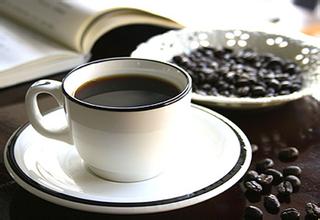
Dominic Coffee with pleasant Flavor Flavor and Taste introduction to Fine Coffee in Manor area
In 1795, France and Spain signed the Basel Peace Treaty in Switzerland, agreeing to cede the Santo Domingo area in the eastern part of the Spanish island to France, making the Spanish island a complete French colony. Six years later, Toussaint Lovidur, a black Haitian, led other black slaves to revolt against French rule, and in 1801 captured Santo Domingo, which had just ruled France, thus unifying the whole West.

Introduction of high-quality coffee beans in Dominica coffee flavor and taste area
In 1795, France and Spain signed the Basel Peace Treaty in Switzerland, agreeing to cede the Santo Domingo area in the eastern part of the island of Dominica to France, making the Spanish island a complete French colony. Six years later, Toussaint Lovidur, a black Haitian, led other black slaves to revolt against French rule and captured Santo Domingo in 1801.

Description of characteristics and Flavor of Coffee beans in Latin America
Latin American Coffee also has a small number of Jamaican coffee beans grown at low elevations, which can be slightly identified by their names, such as Blue Mountain Valley Coffee, Jamaican Alpine Coffee and so on. Haitian coffee beans, which are washed by Haiti Haiti, are typically sweet, soft and of medium consistency, but they are often caused by mistakes in the processing and drying process.

Introduction to coffee growing area and growing environment in Port-au-Prince, Haiti
Most of the coffee produced in Haiti is grown in a purely natural state, which is not intentional but the result of material shortages because coffee farmers are too poor to buy fungicides, insecticides and fertilizers. On the contrary, this makes the coffee produced in Haiti the most natural and pollution-free. Haitian coffee has full grains, rich flavor, medium to low acidity and mild taste.

Flavor and taste characteristics of Dominica Santo Domingo Coffee Manor with a winding and smooth aftertaste
In 1795, France and Spain signed the Basel Peace Treaty in Switzerland, agreeing to cede the Santo Domingo area in the eastern part of the island of Dominica to France, making the Spanish island a complete French colony. Six years later, Toussaint Lovidur, a black Haitian, led other black slaves to revolt against French rule and captured Santo Domingo in 1801.

Introduction of the famous Coffee Manor Brand in the World
Despite well-known problems and fluctuating coffee quality from politically troubled lands, Haiti is still trying to produce some high-quality coffee. Most of the coffee produced in Haiti is grown in pure natural form, which is not intentional but the result of material shortage, because farmers are too poor to afford to kill.

53 coffee producing areas in the world
Seven. Haiti's Good Coffee from Politically Troubled Land Despite its well-known problems and fluctuating coffee quality, Haiti is still trying to produce some quality coffee. Most of the coffee produced in Haiti is grown in a purely natural state, not intentionally but as a result of material shortages, because farmers are too poor to buy

Introduction to the characteristics of Dominican Santo Domingo Coffee Flavor Manor
In 1795, France and Spain signed the Basel Peace Treaty in Switzerland, agreeing to cede the Santo Domingo area in the eastern part of the island of Dominica to France, making the Spanish island a complete French colony. Six years later, Toussaint Lovidur, a black Haitian, led other black slaves to revolt against French rule and captured Santo Domingo in 1801.